Sarpasana (Snake Pose): Benefits, Steps & Precautions | Samutkarsh Yog Institute in Prahladnagar, Ahmedabad

Sarpasana Commonly known as the Snake pose,
It’s a backbending posture in Hatha Yoga. Derived from the Sanskrit words Sarpa (Snake) and Asana (posture)
This asan is a advanced form of bhujangasan.
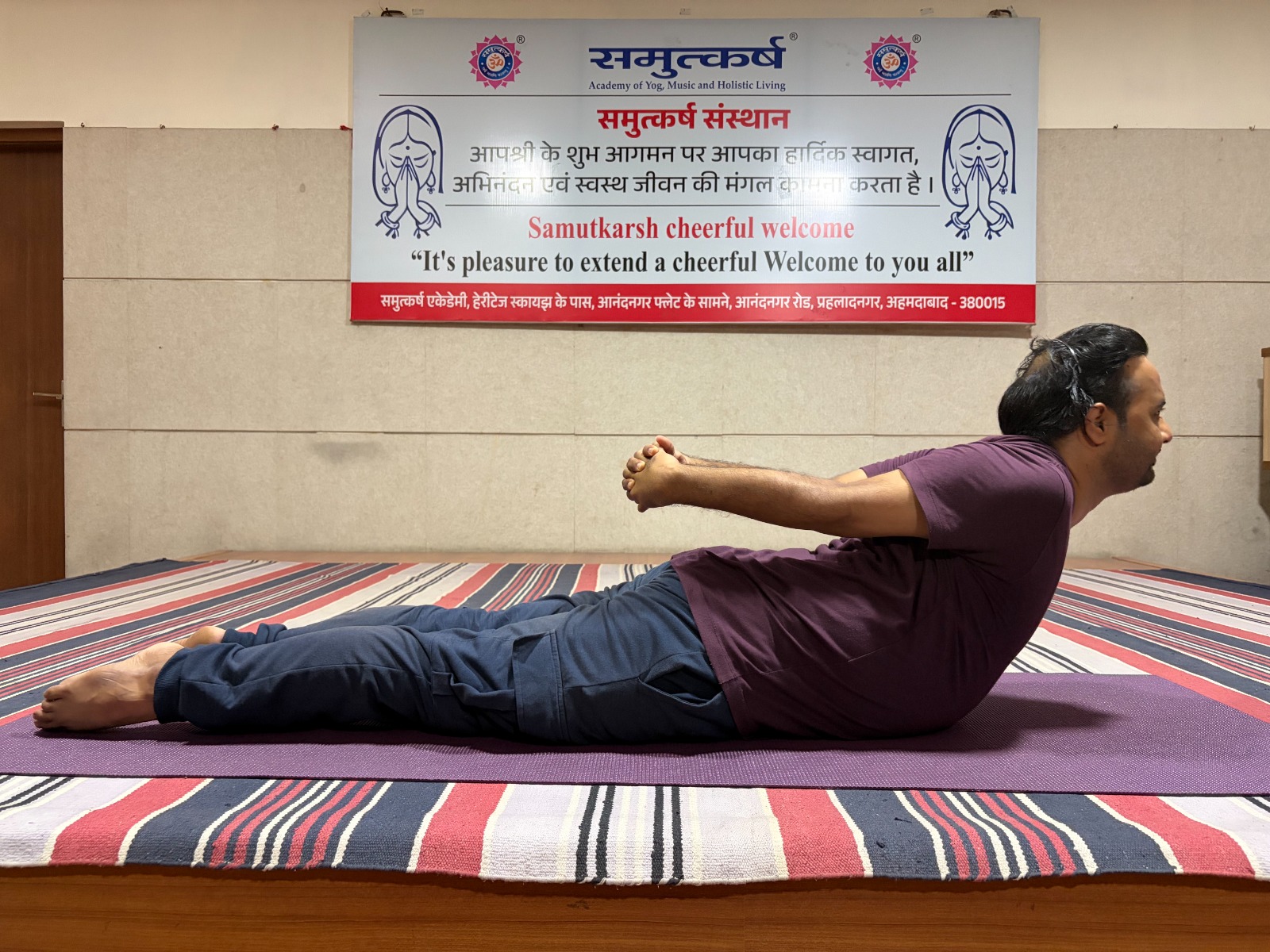
Practitioners often confuse Sarpasana with Bhujangalan (Cobra pose), the key difference is in arm placement and muscle engagement. In bhujangason palms rest on the mat to assist body to lift while in Sarpa sana, the hands are interlocked behind the back forcing the spinal, upper back and re Core to lift the torso without leverage from the arms
Method:
step-by-step Instructions
1) Take Prone lying position
Keep your legs close together, toes extended Pointing back and forehead resting gently on the mat
2) Interlock the fingers and place the hands on the top of the buttocks. Place the chin on the floor
3) Using the lower back muscles raise the Chest as for as possible from the floor. Push the hands further back and raise the arms as s high as is Comfortable, Imagine the arms are being Pulled from behind 4) Raise the body as high as possible without straining Squeeze the shoulder blades together and look forward.
5) Hold the position as long as its comfortable while breathing normally
6) Slowly return to the Starting position and relax the whole body. Release the hands and relax the arms by the sides of the body. Turn the head on one Side
This is one round. Practice up to 5 rounds.
Health benefits..
1) It keeps the Spine healthy flexible & efficient
2) Reverses the effects of prolonged sitting or Slouching by opening the thoracic spine and retracting rounded Shoulders.
3) It helps in expanding ribcage allowing the lungs to inflate fully and improves respiratory Control.
4) It reduces the surplus fat on the abdomen
5) It keeps the muscles & abdomen strong and abdominal viscera healthy.
Precautions S Contraindications
1) People suffering from peptic ulcers, hernia, hyperthyroidism intestinal tuberculosis Should not practise this asana
2) People with heart conditions and high blood Pressure Should not perform this asan.
3) Individuals with acute disc herniation or Severe Sciatica should avoid deep backward extensions.
Written By Purvi Shah , Samutkarsh Academy of Yog Music & Holistic Living ,
Dept. of Yog , 9327575725